- Home
- about stbrigits
- Acceptance of St. Brigit's Community Catholic Church
Simply Catholic and Welcoming You
Acceptance of St. Brigit's Community Catholic Church
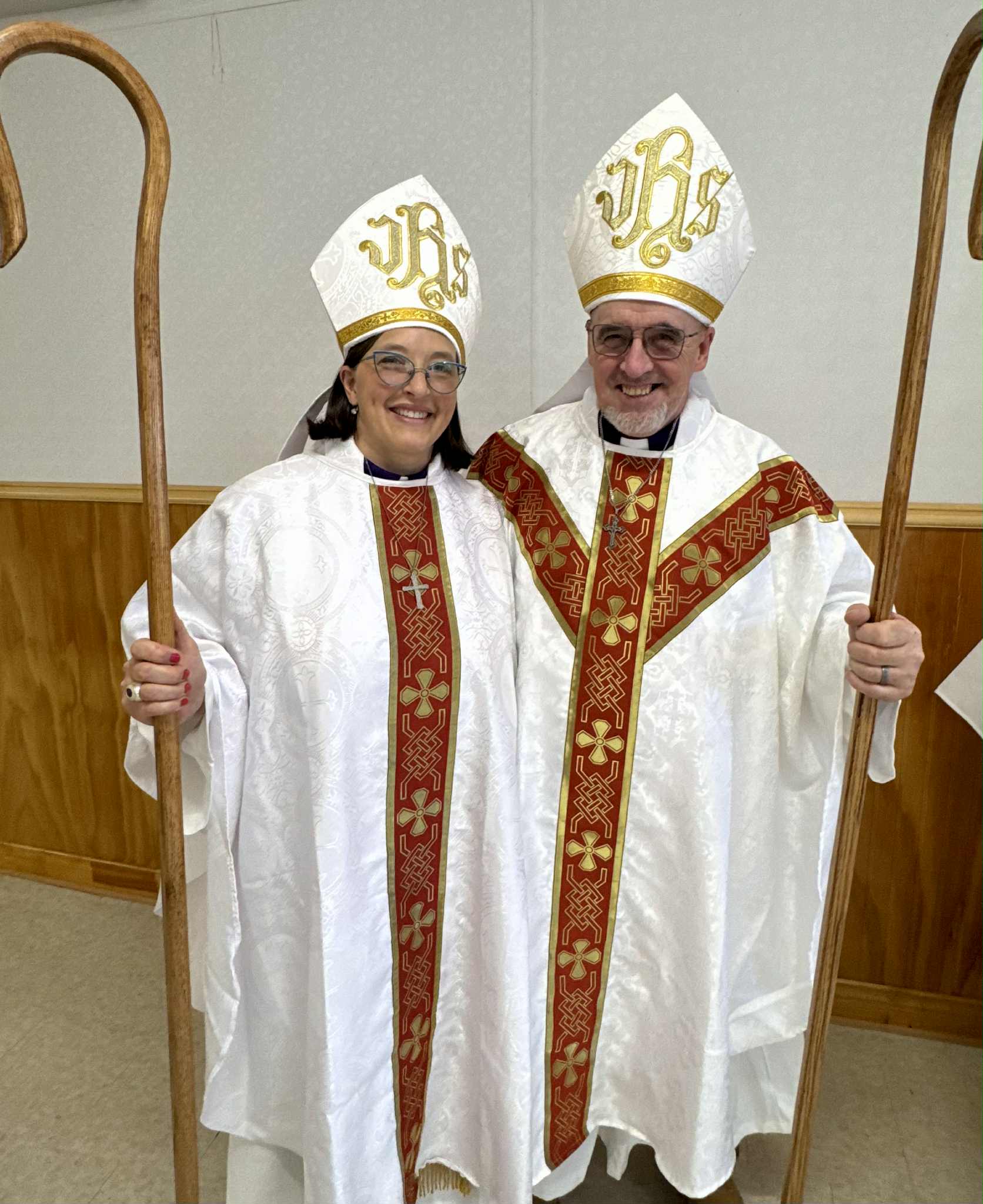
Provincial Bishop Charlene Bradley and Archbishop Philip Bradley - Husband and Wife Episcopate in St. Brigit's Community Catholic Church
In essence, St.Brigit’s Community Catholic Church appeals to those seeking a contemporary, non-judgmental, and community-focused environment that practices a universal (catholic) love for everyone, while still honouring the traditions and sacraments of the ancient church. We welcome and affirm ALL people.
We invite you to explore this site, especially the pages linked on the About Us page and 'Home"/Welcome page, linked at top, to get a better 'feel' for who we are and of our open acceptance and affirmation of all people. Also we invite you to use our Contact Us page for next steps or inquiries regarding any aspect of our church and our call to those interested in becoming clergy.
The primary appeal of St. Brigit's Community Catholic Church in general and in Newfoundland and Labrador specifically, lies in its vibrant, inclusive, and community-oriented approach to faith.
Key aspects of its appeal include:
- Inclusivity: The church joyfully welcomes all people regardless of sexual orientation, gender identity, marital status, or denominational background.
- Community Focus: The church emphasizes building a strong, supportive community through shared activities, social events, and a pastoral care team.
- Progressive Values: St. Brigit’s C.C.C. is committed to supporting gender equality, social justice, environmentalism, and open conversations about faith, including allowing women and married people to be ordained as priests.
- Sacramental Ministry: We offer the seven Catholic sacraments, including communion to all baptized Christians, and provide clergy for weddings and funerals regardless of the participants' church of origin.
- Accessibility: The church holds both in-person and online (Zoom) masses, making it accessible to a wider community. It also offers free, non-accredited seminary training to qualified candidates for the clergy to fill local needs. We welcome anyone who feels the call to ministry and can provide a clear vulnerable sector check to contact us to begin your steps towards becoming clergy. Our website following is growing by 500 new visitors each month and we would love and appreciate if you would share our website with your friends too.
- Historical Connection: The congregation has a strong connection to Irish heritage, as reflected in its name and historical context, with some of its practices stemming from the "Old Catholic" tradition that predates the 1870 declaration of Papal Infallibility. After this declaration those who voted for papal supremacy became known as "Roman Catholics" while those who choose to remain the same church as before this declaration became known as "Old Catholics" (of which St. Brigit's Community Catholic Church is a branch). Until then both were literally the same church.
Now for a little reality statement:
Probability of Acceptance of St. Brigit's Community Catholic Church and Clergy in Areas No Longer Served by the Roman Catholic Church
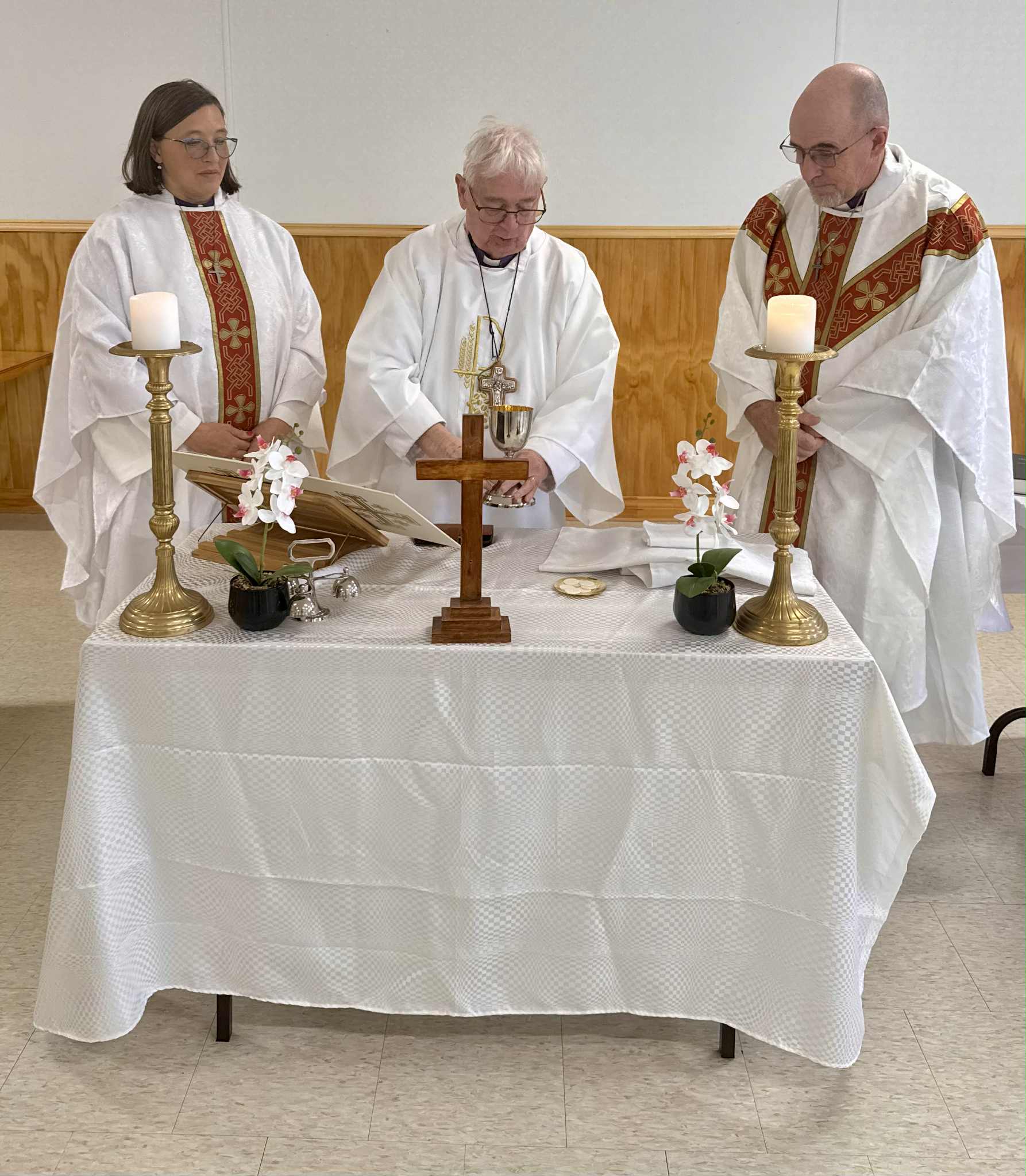
Archbishop Thomas Twose (Center) flanked by Provincial Bishop Charlene Bradley (Left) and Archbishop Philip Bradley (Right) - The Bradley's are an Episcopal Married Couple, an Impossibility in the Roman Catholic Church
St. Brigit's Community Catholic Church is not affiliated with the Roman Catholic Church (RCC), and therefore its acceptance among traditional Roman Catholics in areas where the RCC has shuttered parishes is likely to be low. We know and accept this. St. Brigit's Community Catholic Church is an independent "Old Catholic" jurisdiction and its practices (not its faith) conflict with official Roman Catholic doctrine.
We love and respect our Roman/Latin sister church and offer the following as a comparison, not to offend or confront our R.C.C. brothers and sisters. Simply to acknowledge the differences that do exist and why many Roman Catholics will not accept our church nor ministries. We accept their right to reject our branch of Catholicism and, in turn, take no offence from it.
Indeed, in local cases where church buildings were closed and/or no priest was available we offered to step up and help out. No strings attached. Some kindly declined our offer. Some were very pointed in their refusal of our help. We offer, we don't push.
We have enjoyed ministering to some locals with no strong church affiliation and to some who were harmed by their church of origin and do not feel inclined to return there. We were even able to hear confessions from some people car to car throughout the pandemic. We are Blessed and grateful for such service opportunities. Often ministry is simply where you find it, not officially wrapped and classified.
This website, at the time of this writing has over 6,500 visitors each month and is now growing by over 500 visitors per month. We invite you to share this website with your friends too.
Key Differences and Conflicts
The primary reason for our expected low acceptance from R.C.C. congregations stems from several doctrinal and practical differences that the Roman Catholic Church does not recognize:
- Papal Authority: St. Brigit's rejects the doctrine of Papal Infallibility, a core tenet of modern Roman Catholicism and a stance in keeping with our Old Catholic roots.
- Clergy: St. Brigit's has married clergy and female deacons, priests and episcopate, practices that are not permitted in the Roman Catholic Church.
- Sacraments: St. Brigit's offers immediate remarriage after divorce without an annulment process, and practices open communion, welcoming all Christians to the Eucharist; neither is allowed in the Roman Catholic Church.
- Inclusion: St. Brigit's explicitly welcomes members of the 2SLGBTQ+ community to fully participate in the sacraments without restriction or exclusion, which is a more liberal stance than the official Roman Catholic position.
Acceptance Factors
- For Roman Catholics: Members of the Roman Catholic Church who lose their parish would likely be directed, by their episcopate, to other official Roman Catholic parishes within their diocese or an "extinctive union" with a nearby parish, not to an independent church. The Vatican does not recognize the clergy or the sacraments, even of Apostolic Independent Catholic Churches such as ours, as valid in the same way as its own.
- For the wider community: St. Brigit's Community Catholic Church might find acceptance among individuals who desire a "Catholic" experience but seek a more inclusive and less traditional environment, or those who have felt rejected or harmed by the Roman Catholic Church due to personal circumstances.
- Ecumenical Relations: St. Brigit's has inter-communion with other independent bodies, such as the Holy Celtic Catholic Church in Canada, Prince of Peace Community Catholic Church, The Liberal Catholic Church International, the Old Catholic Apostolic Church and others and is part of the "other" Catholic churches, like the Eastern Orthodox (in terms of sharing apostolic succession but not communion).
In fact, while St. Brigit's Community Catholic Church uses the Roman Rite for Mass and considers itself "simply Catholic," it is a separate denomination. Roman Catholic adherents looking for an official, orthodox replacement for their closed parish would not view St. Brigit's C.C.C. as an acceptable substitute. We understand that.
Even though the canons of both denominations accept each other's Apostolic Succession and the valid nature of their respective priesthood orders and would accept as being valid the sacraments from each other, primarily in exigent (emergency) circumstances such as last rites upon imminent death, we follow different expressions of the same faith as well as adhering to different policies and procedures.
Yet, as the Roman Catholic Church shutters parishes in places with fewer people in the pews and fewer priests in the pulpits—along with the financial toll of its abuse crisis—it’s often other religious groups who buy and lease the vacated church sites and adopt the orphaned congregations. Or simply offer services and mass in other public spaces or private homes.
Those who do attend our services and mass will find we are word for word the same in each sacrament as our Roman counterparts although, upon request we will also offer the sacraments in the Anglican Rite (again word for word) as per their specific requirements.
Acceptance of St. Brigit's Community Catholic Church and Clergy in Today's Climate of Church Closures
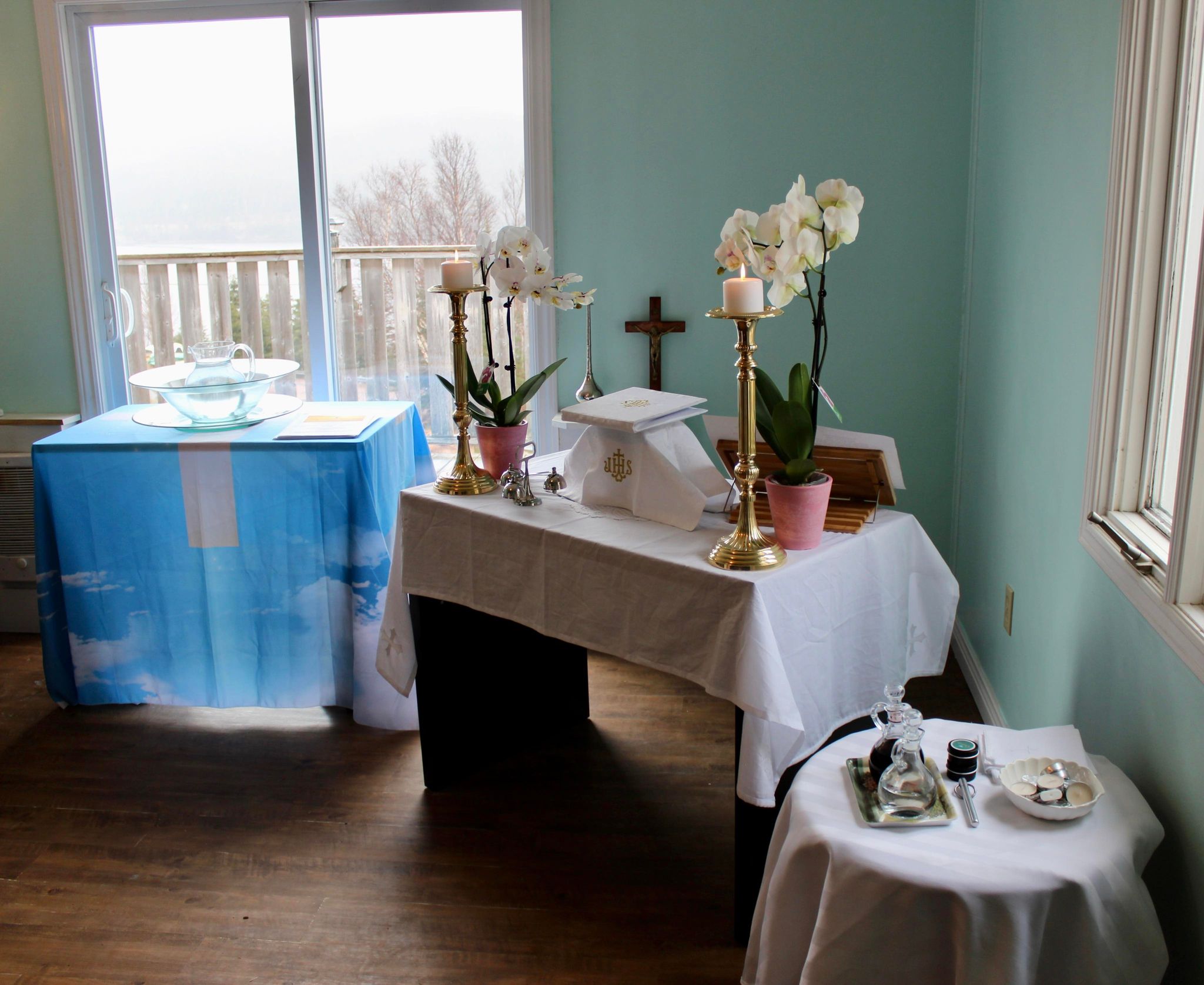
A Home Altar Flanked By a Credence Table and a Baptismal Font - St. Brigit's Community Catholic Church is in Full Apostolic Succession and is a Sacramental Church Providing all Seven Catholic Sacraments
Currently the Roman Catholic Church has closed 28% of its churches in Canada and those that remain open are seeing only 11% to 20% attendance compared to their former numbers and current church records.
An estimated one-third of all of Canada's approximately 27,000 faith buildings are expected to close permanently within a decade of reports published in 2019, which translates to a projected loss of around 9,000 churches.
This trend is driven by declining religiosity, falling attendance, rising building maintenance costs, and various social factors.
One of the goals of St. Brigit's Community Catholic Church is to be available and provide clergy and services to such orphaned congregations. If you need us or have questions, please use our contact us page or phone me directly. My cell number is on the contact page.
Key Statistics on Church Closures in Canada
- Projected Closures: A report citing data from the National Trust for Canada warns that 9,000 religious spaces, or roughly a third of all faith-owned buildings in the country, are at risk of being lost permanently in the near future.
- Rate of Decline: Overall, church attendance in Canada is estimated to be dropping by about 1% each year.
- Denominational Impacts:
- In Quebec, over 500 churches (20% of the total) have been closed or converted since the 'Quiet Revolution'.
- The United Church of Canada, the nation's largest Protestant denomination, lost 40% of its affiliates between the 2011 and 2021 censuses. Projections in 2025 indicated that if closures continue at recent rates (averaging about 54 a year), the denomination might cease to exist as a congregational church by around 2070.
- The Anglican Church of Canada is also experiencing significant decline, with some projections suggesting a "zero-member date" could be reached by 2040 if current trends persist.
- Mainline Protestant and Catholic churches are particularly affected, though some non-denominational and immigrant-led churches are seeing growth.
- Loss of Social Capital: The closures represent a significant loss of "third spaces" and social capital in communities, impacting services that go beyond worship, such as social programs and emergency support.
(A "third space" is a social setting, coined by sociologist Ray Oldenburg, that is separate from the primary places of home ("first place") and work ("second place") where people gather informally to relax, socialize, build community, and connect with diverse individuals. These are vital for civic life and personal well-being, and examples include churches, cafes, libraries, parks, community centers, bars, gyms, and even virtual platforms, offering a neutral ground for interaction. )
The decline of Christian charities as a percentage of all registered charities further illustrates this trend; they represented over 60% of organizations in 1967, but only about 30% by early 2022.
If nothing else, these figures show that people are pulling away from the negative aspects, histories and experiences of their traditional churches of origin, socially disinclined towards religion and its practices or, even more concerning, losing their faith altogether. St. Brigit’s Community Catholic Church is committed to helping those divorced or orphaned from their former churches and those with no current church affiliation to find or return to the One, Holy, Catholic and Apostolic Church, its faith and sacraments, without its negative histories, exclusions and other shortcomings.
Simply Catholic, open to all and inviting everyone to follow Christ and faith, rather than emphasizing governance, rules and policies. Love God, Love your neighbor and love yourself!
Recent Articles


-
The Divine Office
Aug 07, 26 01:16 PM
 The Divine Office The Divine Office, also known as the Liturgy of the Hours or Opus Dei ("Work of God"), is the official, daily set of prayers of the Catholic Church
 -
A Simplified Breviary
Aug 07, 26 01:14 PM
 A Simplified Breviary or Missal of The Divine Office of St. Brigit's Community Catholic Church.
 -
The Ethiopian Bible
Jul 25, 26 09:07 AM
 The Ethiopian Bible, compared to the Roman Catholic and Protestant Bibles gives us a totally different view of early Christian teachings and practices,

Boat Harbour West, Newfoundland, Canada. Cell Number 709-276-0626
Join Us Also on Our St. Brigit's Community Catholic Church Prayer group on Facebook: https://www.facebook.com/groups/324523956473448