- Home
- Other Catholics
- The Ethiopian Bible
- Mashafa Barhan
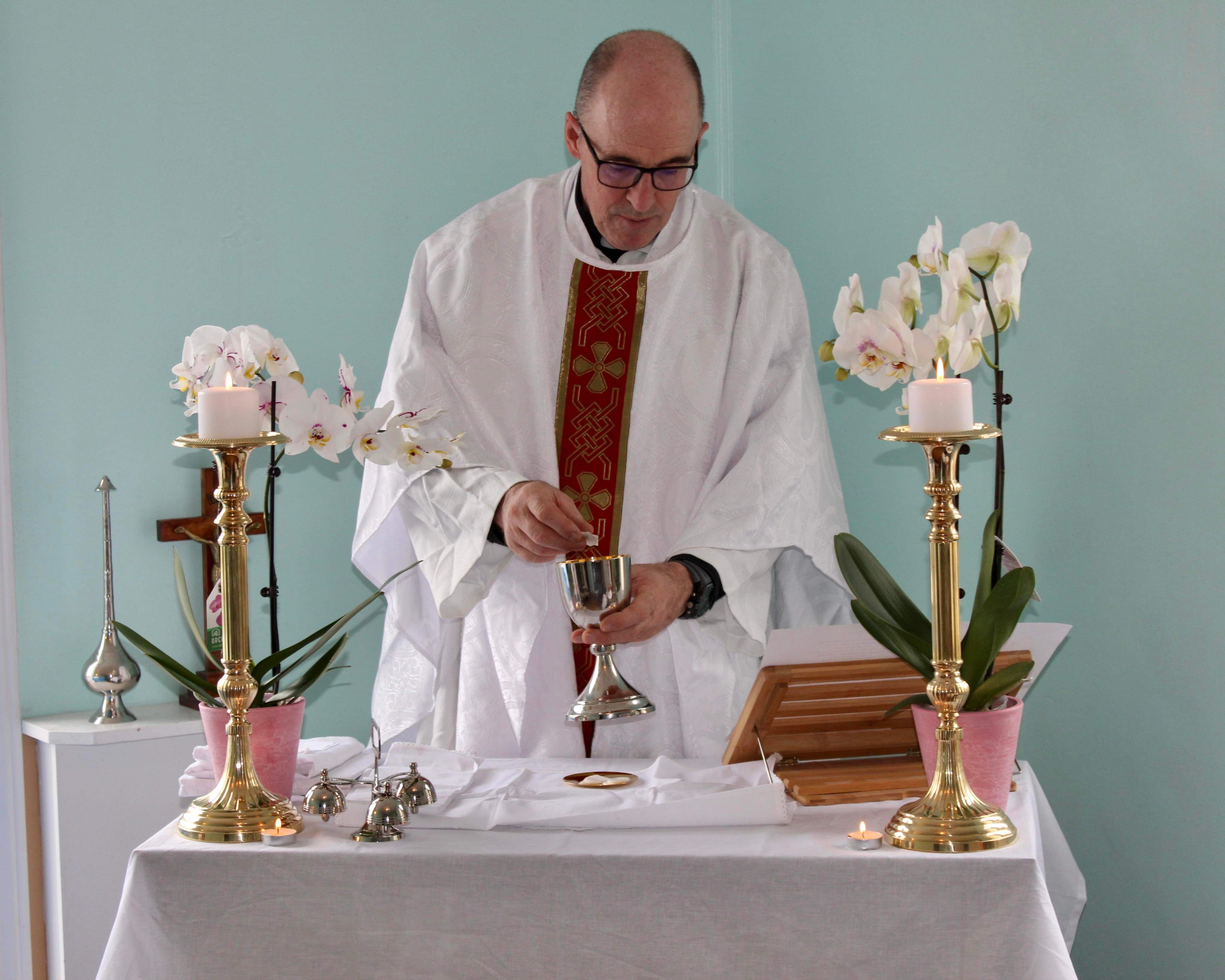
Archbishop Philip Bradley Celebrates the Sacrament of Mass - We do NOT believe that the Method Of Direct Contact with God Poses a Threat to the Church, nor does it "Replace" the Need for The Sacraments. Rather it Gives Us an Additional Tool to Help Us Draw Closer to God.
Simply Catholic and Welcoming You
The Mashafa Barhan
The Mashafa Barhan, the book of light, gives a four step process for gaining direct contact with God!
A leather bound manuscript the color of dark earth sits behind a locked iron gate at the monastery of Debra Leanos 40 miles north of Addis Abbaba in the highlands of Ethiopia. The monks who guard it have been copying its contents by hand for over 1600 years.
The Ethiopian Orthodox Bible contains 88 books. The Protestant Bible contains 66.
The council of Leodysia in 364 CE began the trimming. For 16 centuries, the western church called the missing books dangerous and unfit for ordinary believers. Ethiopia never threw them out. And inside one of those missing books, a text the Western church did not just exclude, but actively argued against in writing.
There is a method, a specific step-by-step method for achieving direct contact with God. Not through a priest, not through a church, not through any institutional mediator - Directly!
The text describes a prayer practice so precise and so effective that Jerome, the scholar who built the Latin Vulgate Bible in 400 CE, called it the most dangerous passage in the forbidden literature. He did not call it false. He called it dangerous.
Here, you will see what the Ethiopian text describes. Why every institution that has encountered this method has moved to suppress it and what modern neuroscience has confirmed about the specific physiological process it produces. But here's what makes this stranger.
The text is the Mashafa Barhan, the book of light, held in manuscript copies at Debra Lebanonos at the island monastery of Daga Estifanos on Lake Tana and at Hika Stefanos in the northern highlands.
The Mashafa Barhan is distinct from other Ethiopian scripture. Where other texts describe theology, what God is, what God wants, what happens after death, the Mashafa Barhan describes method, what to do, in what order, with what intention, at what time, in what physical posture, with what breath pattern.
It reads the way a medical protocol reads, not like a prayer book, but like a procedure. Step one, step two, what happens at each stage, what the practitioner should expect, and what to do when each experience arrives.
Dr. Getachew Haile who was the curator of the Ethiopian Manuscript Microfilm Library and a leading expert on the Ge'ez language, cataloged over 8,000 Ethiopian manuscripts at the Hill Museum and manuscript library in Collegeville, Minnesota identified the Mashafa Barhan as containing the most operationally specific descriptions of divine contact practice in any Christian textual tradition.
Operationally specific, those are the words a scientist uses. Not poetic, not metaphorical, operational.
The manuscript is written in Gaez, the sacred liturgical language of the Ethiopian church, related to but distinct from modern Amharic understood by fewer than 2,000 scholars on earth.
Because this language is so rare, what is written in Gaez stays effectively locked even when the physical book is on a shelf. This is not a conspiracy. This is not reinterpretation. These are accounts copied in stone chapels by monks who believed every word described something real that worked.
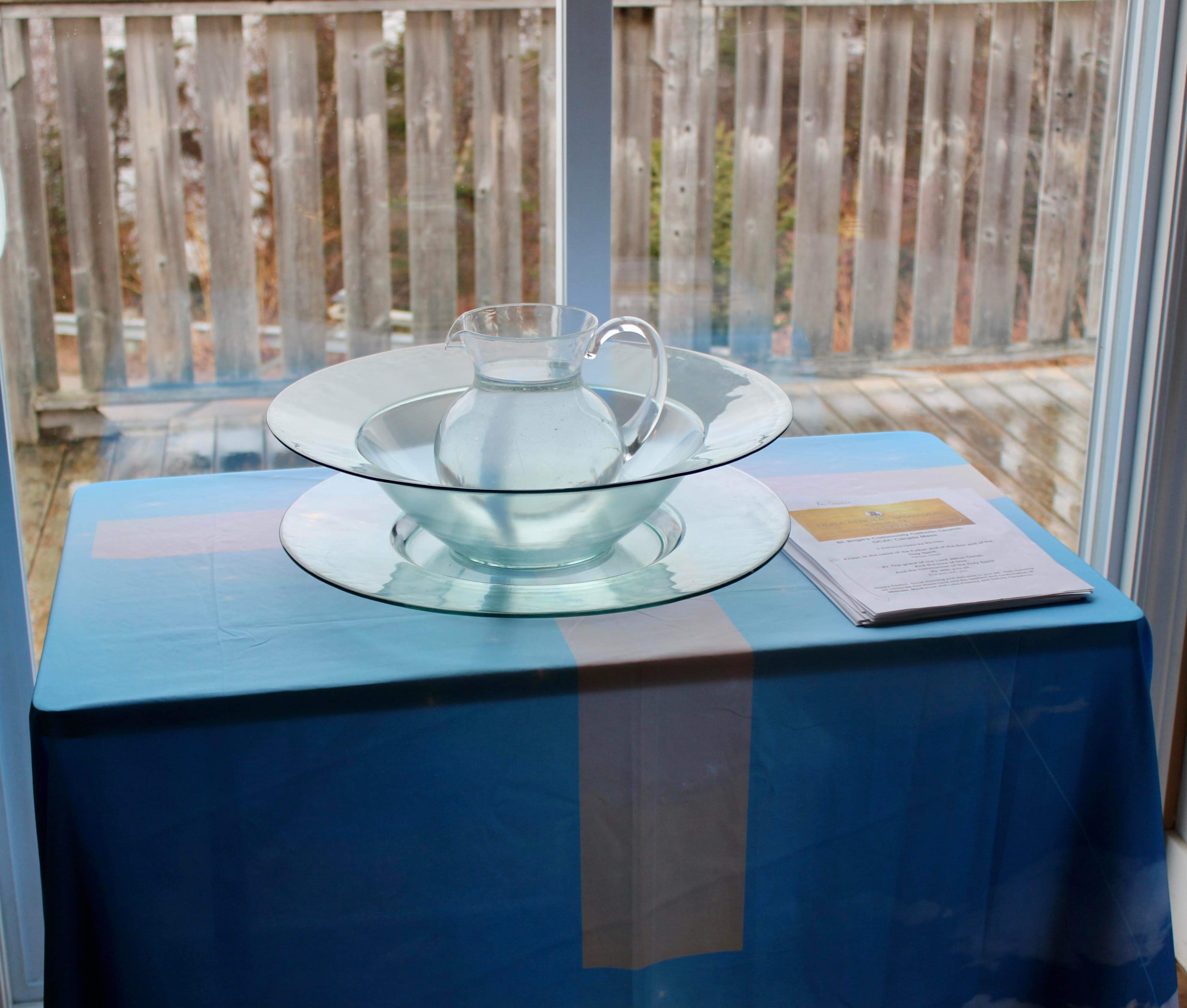
A Simple Baptismal Font - We Believe the Seven Sacraments Will Remain the Process by Which Most People Will Come Into Union With God - Yet The Ethiopia Method of Direct Contact With God Offers Another Way To Make Individual, Personal, Direct Contact for Those Who Can Succeed In Using This Very Specific Method
The Mashafa Barhan, The Actual Process
Something the western church decided ordinary people were not permitted to access. The Mashafa Barhan’s method breaks into four stages. The text describes them as a single continuous process, not separate acts.
Each stage produces a specific physiological and perceptual experience that the next stage builds on. The text is explicit. If the experience does not occur, the practitioner has not completed the stage and must return to its beginning. There are no shortcuts. The method does not work partially.
The first stage is what the Gaez calls Lib Auait the stilling of the inner voice. Not silence, not emptiness, something more specific. The Mashafa Barhan describes the ordinary human mind as producing a continuous internal sound. The same word is used elsewhere in the text for the sound of rushing water, for the sound of wind through trees. Constant, unceasing, present even during sleep in a diminished form.
The first stage of the method is not to stop this sound through effort. The text is explicit that effort produces the opposite of what is needed.
The first stage is to observe the sound without engaging it. The Gaez uses a verb that translates as to stand beside. Not to fight the inner voice, not to silence it, but to stand beside it the way a person stands beside a river without entering it.
The text specifies duration, not a fixed time, a condition.
The first stage is complete when the inner sound becomes perceivable as something separate from the observer.
When the practitioner can, as the Gaez puts it, hear the voice without being the voice. This is the prerequisite for everything that follows. But the text doesn't stop there.
The second stage is where the Mashafa Barhan becomes unlike any western prayer practice. The Gaez calls it Bhane Meestir. The hidden light once the inner voice has been still to the point of separation. The text says a light appears not external light not a vision of light. The Mashafa Barhan is precise here.
The light does not come from outside the practitioner and it does not come from the practitioner's imagination. It arises spontaneously in the center of the chest.
The text describes it as warm, not metaphorically warm, but physically warm, a warmth the practitioner feels in the sternum. It describes it as expanding outward slowly, the way heat spreads from lit coal.
And it specifies that this light carries what the Gaez calls Timhert Akal, a knowing without words information that arrives without language, without image, without any sensory form the practitioner can describe in ordinary terms. The text says this knowing is not the practitioner's own knowledge.
It is received and the practitioner's only task in the second stage is to remain still and allow it to arrive without grasping at it. The way you receive warmth from the sun by standing in it, not by chasing it.
What follows in the third stage is stranger still.
The Gaez calls it Zeta Semar. The voice that cannot be heard. When the second stage has been sustained long enough, something shifts. The warmth intensifies. The knowing deepens. Then something arrives that the text describes as speech, but not speech in any register the practitioner has experienced before.
Not internal dialogue, not remembered voices, not imagination. The text says the voice does not use language that the practitioner knows. It uses the practitioner's language, but it carries meaning that the practitioner's language cannot fully contain.
(The scribe who wrote this passage added a marginal note, a small annotation in a different hand, added later, but old enough to be in the same manuscript tradition that says simply, "The words are yours, but the meaning is not.")
What the practitioner hears sounds like their own inner voice, but says things they have never thought and could not have produced. The Mashafa Barhan calls this the beginning of contact, not the completion, the beginning. And then comes the part the translators removed.
The fourth stage has no Gaez name. The text refers to it only as the arrival, a noun without qualification, as if naming it further would diminish it. The Mashafa Barhan describes the fourth stage in fewer words than any of the others.
The warmth from the second stage spreads beyond the body.
The voice from the third stage becomes indistinguishable from direct knowing.
The separation between the practitioner and what is being contacted dissolves not permanently.
The text is careful to specify and not completely. The practitioner does not disappear. The boundary the Gaez says becomes a membrane still present but permeable in both directions.
What passes through the membrane the text says cannot be carried back in words. It can only be lived. The fourth stage leaves no transmissible content. It leaves only transformation.
The Mashafa Barhan says this transformation is why the practice was suppressed not because it failed because it worked and because a person who has experienced the fourth stage has no further need of institutional mediation between themselves and God.
The posture. The Mashafa Barhan specifies one detail no western summary has included. Not kneeling, not prostration, sitting upright, spine vertical, the same position used in Ethiopian Orthodox liturgical chanting.
The spine must be vertical, the text says, because the warmth that arrives in the second stage travels upward. The Gaez uses a verb for this travel that elsewhere in the text describes the movement of water through a channel, directed, constrained, moving in one direction through a structure built to receive it.
The spine in Mashafa Barhan’s language is that structure. The vertical posture is not ceremonial. It is functional. The text treats it like an engineering specification. This dimension is necessary for the system to work.
The monks sit this way every morning. Not because it is traditional, because the manuscript says it is required.
The breath pattern specified for the transition from the first stage to the second is equally precise. The Mashafa Barhan does not describe controlled breathing in the sense of timed inhales and exhales. It describes what happens to breathing naturally when the first stage is completed correctly. The inner voice stills.
The observer separates from the observed and then the text says breathing slows without the practitioner choosing to slow it. The body responds to the stilling of the mind by reducing its own metabolic demand.
This is not mysticism. This is physiology. The body's rest and restore system activates when internal dialogue stills. Heart rate drops. Breathing deepens. The body enters deep rest while the mind stays alert.
The Mashafa Barhan describes this transition as the signal that the first stage is complete. Not a feeling of peace, not a sensation of calm, a measurable change in the body's breath pattern that the practitioner will notice without effort.
Here's what the translators left out. The Mashafa Barhan includes a passage immediately following the four- stage description that no western account of this text has ever published.
It describes what happens to communities where this practice spreads. The text says that when many people complete the four stages, the communities they live in change, conflict decreases, not because people become passive or submissive.
The text specifies this explicitly. But because the knowing that arrives in the second stage includes consistently the same content that the boundaries between people are the same kind of boundary as the membrane in the fourth stage, permeable. The Mashafa Barhan says the practice does not create community. It reveals a community that was already there invisible to the unstilled mind.
This is the passage Jerome called most dangerous, not the method itself. the social consequence of the method.
A community of people who have individually experienced direct contact with God and who consequently do not need a church to mediate that contact is a community the institutional church cannot govern.
That, the text implies, is why the practice was removed from Western Christianity, not theological error. Political threat! The community effect described in the Mashafa Barhan has one more detail that the suppressed passage contains.
The text says that practitioners who have completed the four stages recognize each other without introduction, not by any physical sign, not by any verbal signal. The Gaez says they know by the quality of the silence. People who have reached the fourth stage carry a different quality that other practitioners perceive immediately.
The text calls this the basis for the true assembly. People who have each individually made direct contact meeting not as institutional members but as people who have been to the same place.
The true assembly the Mashafa Barhan says requires no hierarchy, no ordination, no appointed leader because every member has the same direct access to the same source.
This is the passage that made institutional Christianity most uncomfortable. Not the method itself, the community it naturally produces. A community with no need for hierarchy cannot be governed by hierarchy, cannot be monetized, cannot be controlled.
The part that shouldn't be possible is what modern neuroscience has confirmed.
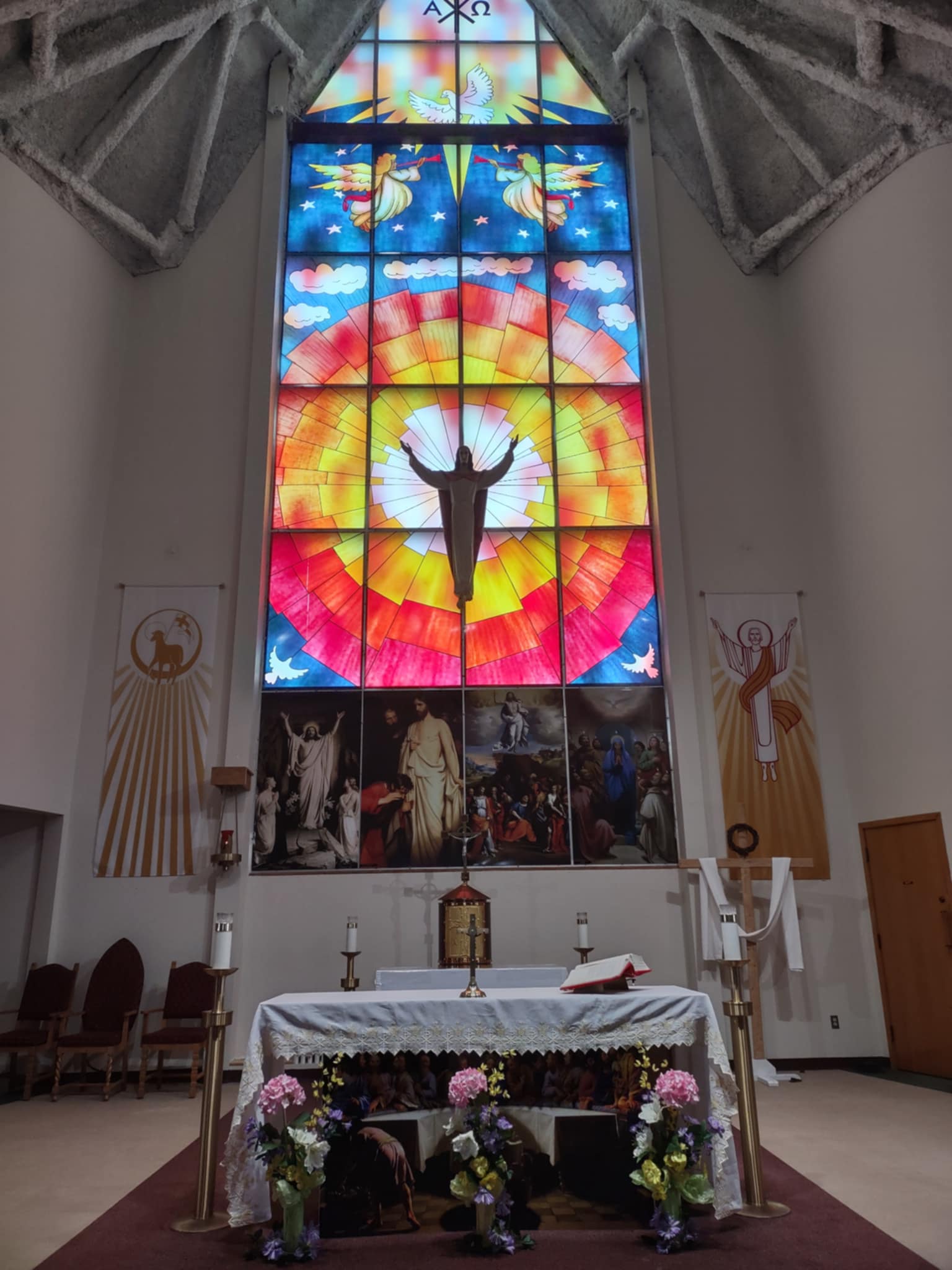
The Altar and Surrounding Area in a Roman Catholic Church - People Will Always Need The Institutional Church, The Sacraments, Ritual Prayers (such as The Holy Rosary, Divine Office, etc.) and The Community of Believers, Regardless of Direct Contact. Some days we need the church, other days the church needs us.
The Mashafa Barhan - what modern neuroscience has confirmed
Dr. Andrew Newberg at the University of Pennsylvania has spent over two decades studying the neurological changes that occur during intense prayer and meditation practices.
Dr. Newberg graduated from the University of Pennsylvania Perelman School of Medicine in 1993 and completed his fellowship there. He is a pioneer in neurotheology—the scientific study of the brain and religious/spiritual experiences. He currently works as the Research Director at the Marcus Institute of Integrative Health at Thomas Jefferson University.
His research documented in his 2009 book, Principles of Neurotheology, identifies a consistent pattern in practitioners who report contact experiences. The parietal lobe, the brain region that constructs the boundary between self and not self, shows measurable decreases in activity during these experiences. The boundary becomes a membrane, not metaphorically, neurologically.
Newberg's instruments record the brain reducing its own boundary enforcement mechanism at the precise moment practitioners report what the Mashafa Barhan calls the arrival.
The Ethiopian text calls it theological. Newberg's instruments call it neurological. Yet it is in fact the same thing.
In 2015, a separate team at the University of Oslo led by Dr. Sven Danger published research in the journal Frontiers in Human Neuroscience examining the neurological signatures of different types of prayer and meditation. Their findings distinguish directive practices.
Research on the neurological signatures of prayer and meditation shows these practices trigger unique, measurable changes in the human brain. You can explore these scientific discoveries through the Frontiers in Human Neuroscience platform to see how focused mental states affect our minds.
Focused attention on a specific content from non-directive practices where the practitioner simply observes without engaging. Non-directive practices produce significantly greater activation in the brain's default mode network associated with deep restful introspection.
The Mashafa Barhan's first stage standing beside the inner voice without engaging it is a nondirective practice. The text's instruction to observe without engaging corresponds precisely to what Danger's team found produces the deepest neurological shift.
The Ethiopian monks have been doing this for 1600 years. The Oslo researchers documented why it works in 2015. The suppression of this practice began at the council of Leodysia in 364 CE. The council stated grounds for excluding the texts that describe direct contact practices were such that accounts encouraged the faithful to bypass the ordained ministry. Not theologically incorrect, socially disruptive.
Jerome, building the Latin Vulgate around 400 CE encountered Mashafa Bhan's four-stage method in a Greek translation and described it in correspondence as a ladder that makes the church unnecessary.
He did not say the ladder was false. He said it made the church unnecessary.
Augustine writing around 420 CE argued that direct unmediated contact with God was theologically impossible for ordinary humans. That such contact required the intercession of the church and the sacraments the church administered.
The Mashafa Barhan says the opposite. The fourth stage is available to any practitioner who completes the first three. No ordination required, no sacrament, no institutional permission.
Then comes the colonial wound. In April 1868, British forces under General Robert Napier looted over 350 Ethiopian manuscripts after defeating Emperor Toadros II at Magdala. They were carried by elephants out of the Highlands. Many remain in the British Library today.
Ethiopia has been requesting their return for over a century. They have been consistently refused.
Among the Napier loot is at least one copy of the Mashafa Barhan listed in the British Library's Ethiopian catalog as a bound Gaez manuscript of devotional practice. The four stage method it contains has not been published in any accessible English translation. The sections describing the third and fourth stages are listed in the catalog as of restricted scholarly interest. No explanation is given for the restriction.
Now here's where it gets interesting. In 2017, a team of researchers from the University of Edinburgh submitted a formal application to the Ethiopian Orthodox Patriarchate for permission to conduct a comparative study of the Mashafa Barhan's four-stage method alongside Newberg's neurological research, specifically to test whether practitioners trained in the four-stage method showed the same parietal lobe changes that Newberg's subjects showed during unguided experiences.
The Holy Sinn (Gaez authorities) reviewed it for 18 months. The relevant sections were designated liturgically restricted available for services, not for external research. The application was declined. The research was not conducted.
Newberg's neurological data sits in peer-reviewed journals. The Mashafa Barhan sits in monastery libraries. The comparison that would confirm whether the four-stage method produces the same neurological signature as direct contact experiences has never been made.
The institutions holding both sides of that comparison have ensured separately and through different mechanisms that no one has been permitted to make it.
Now, let me be clear. I am not saying the Mashafa Barhan is a guaranteed pathway to a supernatural encounter that can be scientifically replicated under laboratory conditions. The text is ancient. It passed through centuries of copying and transmission.
What works for a monk who has spent decades in the practice may not translate directly to a first attempt by someone who has just heard of it.
The fourth stage, the text itself warns, cannot be forced and cannot be scheduled. It arrives when the first three stages have been genuinely completed. Genuine completion, the Mashafa Barhan suggests, may take years of sustained practice.
But what the text describes when read in the original Gaez rather than the compressed summaries that have occasionally appeared in western scholarship is a method with internal logic. A sequence in which each stage creates the conditions for the next in which the neurological changes that modern science can document correspond precisely to the experiential descriptions the scribe recorded 1600 years ago.
The method is still there in a manuscript, in a stone building in the highlands of Ethiopia, being practiced every morning by monks who have never stopped believing that direct contact with God is not a promise for the afterlife. It is a practice available now.
What we have to confront is what Jerome actually said. Not that the method was false, not that it was dangerous to the soul, that it made the church unnecessary.
That single sentence written by the man who built the Bible most of the western world still reads is the most honest statement about why this text was removed that any institution has ever produced.
The Mashafa Barhan is still at Debra Leanos. The monks still practice the four stages at dawn.
The British Library still holds a copy with the third and fourth stage descriptions listed as restricted.
Newberg's parietal lobe data is still in the journals.
What we at St. Brigit's Community Catholic Church are absolutely NOT saying, is that everyone or anyone can complete this practice successfully. We understand that many will simply never be interested in even trying. Some will try and simply give up. Some will spend prolonged times making sincere efforts yet without success. The text itself says clearly that it takes trained practitioners decades to succeed!
Jesus repeatedly said "Let those with eyes see, let those with ears hear". Indicating that not everyone has the same abilities, disciplines, inclinations, interests or devotion to grasp all His teachings. That is simply a basic understanding of the human condition.
Do we think that this method will actually put churches at risk? Absolutely not. All of us will continue to require the sacraments and guidance, at least to some extent, that we get from our church affiliations and we are never more in the service of our God than when we are in the service of our fellow man. Yet we are called to build individual relationships with Jesus and Heavenly Father (God), regardless of our 'church standing'. What different churches we would have and how different our world would be if more people actually do make direct contact with our God.
The manifestation of the power of the Holy Spirit, the love, the accountability, the justice and peace that would follow such a growth in the numbers of those whose daily practice even attempted to achieve such contact would be totally amazing.
With a lifelong history of martial arts and meditative disciplines and knowing the lived benefits derived from such meditations, I happily started attempting this extension of such practices. I have always believed in prayerful meditation or meditative prayer, if you prefer that terminology, over merely recited prayers.
My prayerful meditations have, I believe, led me to become a much better person and better connected to the Holy Spirit. I look forward to the outcomes of this specific practice, even if it takes few decades more to 'complete'.
Meanwhile the method Jerome called most dangerous, the ladder he said made the church unnecessary, is still being climbed every morning in a stone building in the highlands of Ethiopia by people who have never needed anyone's permission to reach the direct point of contact with God.
Recent Articles


-
The Divine Office
Aug 07, 26 01:16 PM
 The Divine Office The Divine Office, also known as the Liturgy of the Hours or Opus Dei ("Work of God"), is the official, daily set of prayers of the Catholic Church
 -
A Simplified Breviary
Aug 07, 26 01:14 PM
 A Simplified Breviary or Missal of The Divine Office of St. Brigit's Community Catholic Church.
 -
The Ethiopian Bible
Jul 25, 26 09:07 AM
 The Ethiopian Bible, compared to the Roman Catholic and Protestant Bibles gives us a totally different view of early Christian teachings and practices,

Boat Harbour West, Newfoundland, Canada. Cell Number 709-276-0626
Join Us Also on Our St. Brigit's Community Catholic Church Prayer group on Facebook: https://www.facebook.com/groups/324523956473448