- Home
- Other Catholics
- Roman Catholic Or Celtic Catholic
- The Neo-Celtic Catholic Movement
Simply Catholic and Welcoming You
The Neo-Celtic Catholic Movement
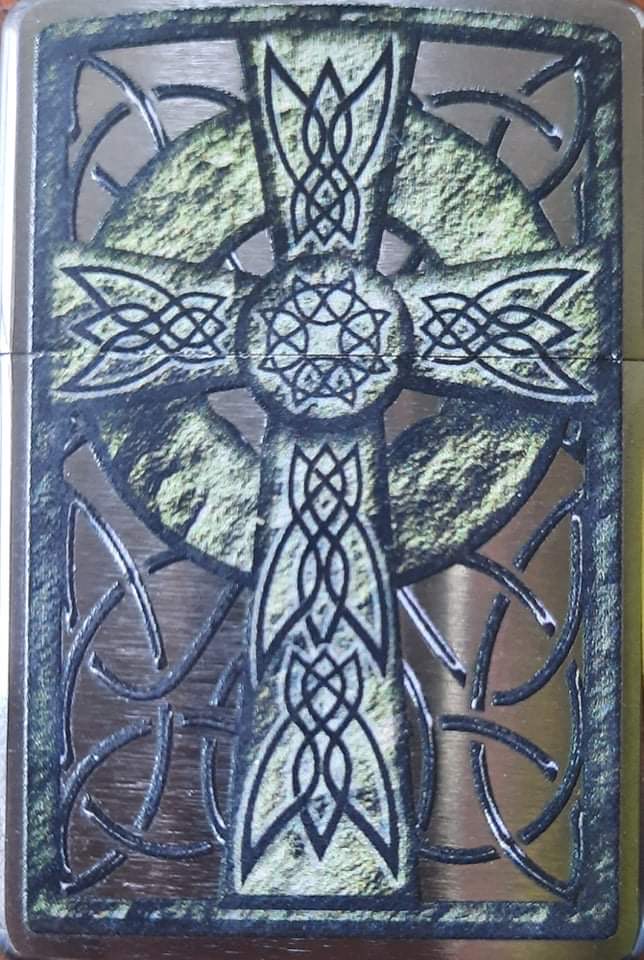
The Celtic Cross - A Symbol Adopted by Both Celtic Catholics and The Neo- Celtic Catholic Movement
The Neo-Celtic Catholic movement, more accurately referred to as Contemporary Celtic Christianity or the modern "Celtic spirituality" movement, describes various modern groups that seek to re-assert or restore beliefs and practices they believe originated in early Celtic Christianity.
The neo-Celtic Catholic movement is largely a product of 19th and 20th-century romanticism and New Age ideas, often diverging significantly from the historically austere and monastic nature of actual early medieval Celtic Christianity.
Key Characteristics of The Neo-Celtic Catholic Movement
Adherents of contemporary Celtic Christianity are drawn to a spirituality they perceive as being:
- Nature-focused and holistic: Emphasizing a deep connection with the natural world and seeing humanity as integrated within nature, a contrast to more traditional Christian views of dominion. A look at the life, and legend of St. Francis of Assisi proves that these views were not purely “Celtic” nor foreign within the larger Roman church.
- Egalitarian and inclusive: Often valuing the role of women's leadership and being open to those on the margins.The Insular Christianity of the Celtic Church, as seen by these groups, seemed more monastic and ascetic but far less hierarchical and legalistic than their Roman/Latin Catholic counterpart, even permitting important roles for women and encouraging literacy among the masses both of which the larger body of the Roman church strongly opposed. In the case of general literacy this position lasted at least until our more recent history of church run schools to educate the general population.
- Gentle, tolerant, and mystical: Portraying a less dogmatic form of faith, with a focus on subjective spiritual experience, meditation, and "thin places" (areas where the divine is easily accessed). Again, such views and religious expressions exist within the larger Catholic Rite churches, just not prevalently so.
- Non-hierarchical: Favoring localized community autonomy and a distrust of rigid ecclesiastical structures, as opposed to the Roman Catholic and other Catholic Rite Church's hierarchical, episcopal structure. Today we understand these factors to have been much more a by-product of geographical isolation rather than deliberate differences.
Distinctions from Historical Celtic Christianity
Scholars note that many aspects of the modern neo-Celtic movement are based on persistent myths and modern desires rather than historical reality.
- Historical reality: The early medieval Celtic Church was intensely monastic, ethically rigorous, and highly ascetic, involving strict penitential practices and a strong emphasis on scholarship and the "Desert Fathers" tradition (see below).
- Relationship to Rome: The historical Celtic Church was not a separate, anti-Roman entity. While it had some unique liturgical differences (such as the method of calculating Easter), it considered itself part of the broader Roman Christian world and its clergy were in communion with the ‘See of Peter’.
- Paganism: While some pre-Christian customs and sites were adopted into Christian practice (e.g., holy wells, certain artistic motifs like the Celtic Cross), the early saints were focused on Christian conversion and did not intentionally blend Christian theology with pagan practices.
Contemporary Groups
Various contemporary groups identify with this movement, some remaining within established denominations (like the Anglican or Episcopal Church and Roman Catholics) and incorporating Celtic themes and music, while others operate as "independent Catholic" or "Community Catholic" churches or "Old Catholic" offshoots. These groups often have valid lines of Apostolic Succession but operate with significant liturgical and doctrinal freedom.
Indeed our own St. Brigit's Community Catholic Church, while not seeking to claim being Celtic as part of our charism, (other than myself being born Irish) enjoys exactly the liturgical and doctrinal freedoms referred to and our clergy has full Apostolic Succession and valid priesthood orders. As a church body we are inclusive, welcoming all to join us in worship and at Holy Communion. We also have no gender nor sexual orientation bias, seeing all people as deserving of equal merit before our God and each other.
In terms of historical documentation, there is no evidence of a unifying 'Celtic' theology, or even continuity of doctrine between churches in Scotland, Wales and Ireland, despite the most fervent hopes of 19th Century Romantic 'historians' or re-creationists.
The Neo-Celtic Catholic Movement - The Desert Fathers and The Anamchara
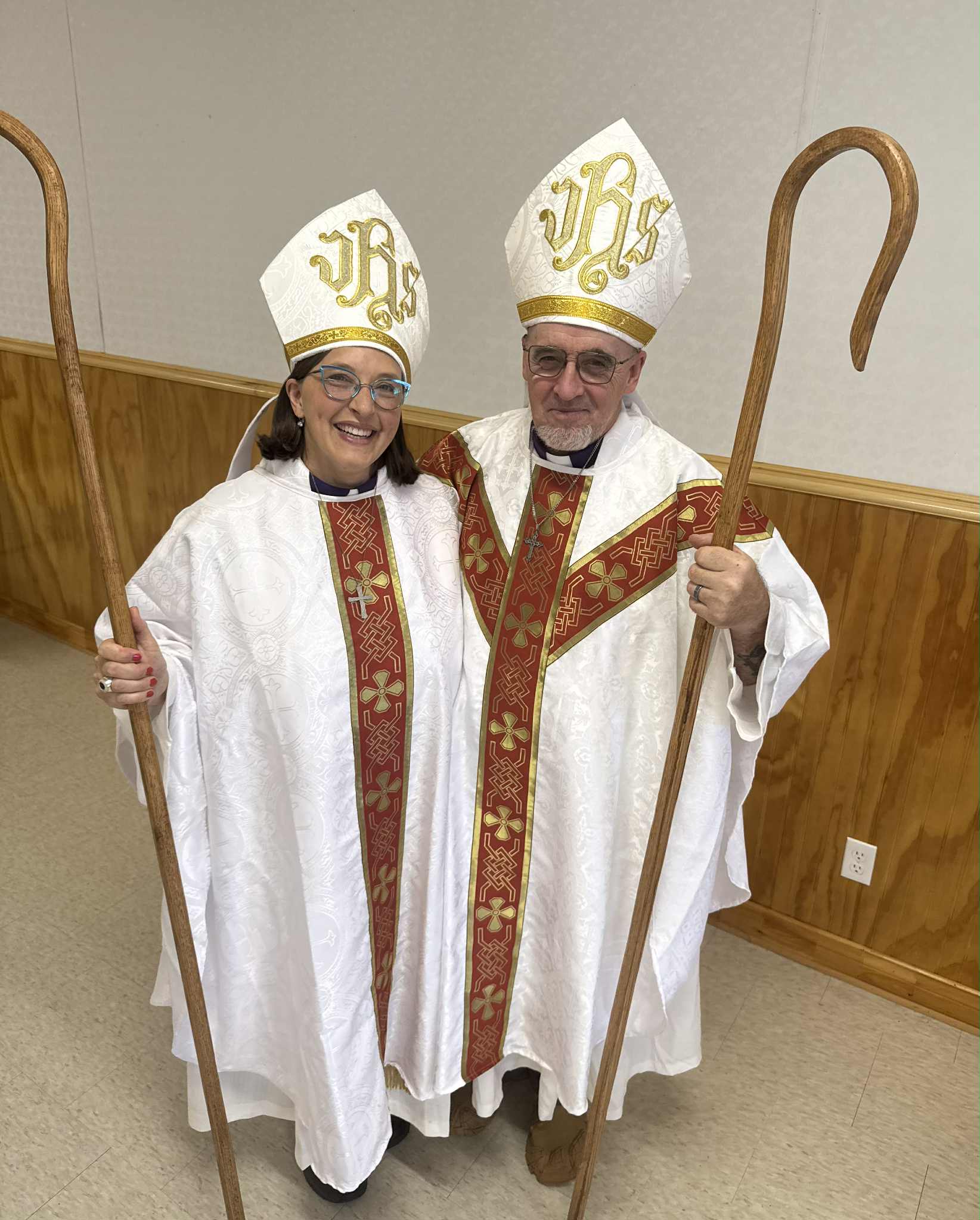
Bishop Charlene Bradley and Archbishop Philip Bradley - Many Catholic Rites Distinguish Their Clergy From The Roman/Latin Rite By Referring to Their Clergy as Abba and Amma Rather Than The Latin Rite Use of Father or Mother
The Desert Fathers (and Mothers) were early Christian ascetics (3rd-5th centuries) who lived in the Egyptian wilderness seeking solitude, prayer, and union with God, establishing the foundations of Christian monasticism through radical self-denial and spiritual wisdom. Referred to as "Abbas" (fathers) and "Ammas" (mothers), their teachings are preserved in collections like "Sayings of the Desert Fathers".
Key aspects of the Desert Fathers tradition
- Origin: Began in the Egyptian desert in the 3rd century with figures like Paul of Thebes and Anthony the Great (the first major figure).
- Motivation: Initially, some fled persecution, but later, many sought purity of faith away from a more mainstream, ‘comfortable’ Christianity (post-Edict of Milan).
- Lifestyle: Extreme asceticism (poverty, fasting, silence, celibacy), focused on prayer, manual labor, and harmony.
- Practice: Living as hermits (alone) or in small communities, seeking spiritual counsel from "Abbas" (fathers) and "Ammas" (mothers).
- Core Goals: Achieve theosis (union with God), cultivate humility, and confront inner demons/thoughts.
- Legacy: Formed the basis of monasticism and provided deep wisdom on prayer, love, and repentance, influencing later Christian spirituality (Orthodox, Catholic, Celtic, etc.).
The historical origins of the practice and concept of the Celtic Anamchara (Irish Gaelic) can be traced further back to these early Christian Desert Fathers and Mothers in Egypt, Palestine, and Syria. These hermits had a unique ability for compassionate friendship and spiritual guidance, and their teachings were spread to Western Europe, where the Celts combined the concept with their own, pre-christian practice of the soul friend (the literal meaning of Anamchara) thereafter making this a part of their Christian faith practice.
The core idea of Anamchara involves a "soul friend" who acts as a spiritual guide, teacher, or companion through life's journey. A spiritual Abba (father) or Amma (mother). The term is also Anglicized as Anam Cara. This tradition of the Anamchara is commonly adopted by many in the neo-Celtic Catholic movement today.
Recent Articles


-
The Divine Office
Aug 07, 26 01:16 PM
 The Divine Office The Divine Office, also known as the Liturgy of the Hours or Opus Dei ("Work of God"), is the official, daily set of prayers of the Catholic Church
 -
A Simplified Breviary
Aug 07, 26 01:14 PM
 A Simplified Breviary or Missal of The Divine Office of St. Brigit's Community Catholic Church.
 -
The Ethiopian Bible
Jul 25, 26 09:07 AM
 The Ethiopian Bible, compared to the Roman Catholic and Protestant Bibles gives us a totally different view of early Christian teachings and practices,

Boat Harbour West, Newfoundland, Canada. Cell Number 709-276-0626
Join Us Also on Our St. Brigit's Community Catholic Church Prayer group on Facebook: https://www.facebook.com/groups/324523956473448