- Home
- simply catholic
- Tau Crucifixion
Simply Catholic and Welcoming You
The Tau Crucifixion of Jesus
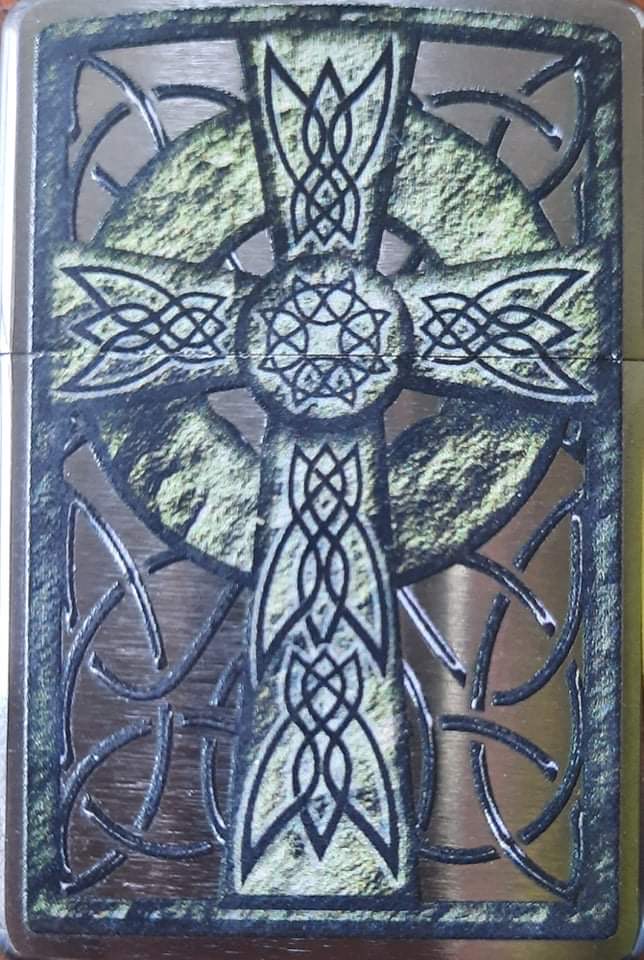
A Celtic Version of the Latin Cross - One Where the Cross Member/Horizontal beam Intersects the Vertical/Upright beam.
The Tau crucifixion is most likely the actual method of crucifixion employed in the torture and death of our Lord and Saviour Jesus Christ. While most current depictions of His crucifixion show the Latin cross, with the upright and horizontal members intersecting and positioning Christ’s head at this intersection, this would have been unlikely and unusual at that time.
Likewise, while most artwork depicts Christ carrying the whole Latin cross, He was most likely made to carry only the horizontal beam of the Tau cross as even that would have been almost impossible for someone who had been flayed/whipped with whips that included metal and glass in the ends of the multiple lashes of that whip. Designed to cut, literally to the bone on every stroke, this was a formidable weapon of horror and a true torturer's tool.
Carrying the whole cross would have been impossible for anyone so tortured and abused as He was. Also the Romans were not in the habit of manufacturing ‘new’ crosses. Rather they reused the same stipes/vertical beams set two to three feet into the ground and standing only seven to nine feet tall, in front of the gates of Jerusalem. These had a notch cut into the top of them into which the horizontal beam/patibulum would be set/dropped AFTER the victim was nailed or tied to that cross member.
Iron was also too valuable to be wasted, so, even the nails were reused or reworked until they simply couldn’t be used anymore.
Archaeology and medical science both dispute putting nails through the palms of the hands or the center of the victims feet as the agony of the crucifixion would have caused the victim to tear free of nails so employed. Evidence from several tombs/ossuarys shows nails driven through the wrists and heel bones, usually with wooden washers between the nail and the flesh precisely to make tearing the nails out quite impossible. Credible proof of how this form of execution was actually done.
These bones are strong enough to hold the victims weight yet soft enough for the nail to punch a hole through these bones without them breaking.
The victims, including Jesus would be flayed at the pillar, made to carry the cross member as far as they could while being paraded, naked, through the streets to the place of execution. Then made to lay on the ground where they were nailed or tied to the cross beam. This beam and them would then be lifted onto the vertical post and set into the notch cut on the top of the post for this purpose.
The victims legs would then be positioned, straddling the outside of the vertical beam and bent somewhat so as to permit them to involuntarily struggle for air by forcing their body upwards enough to allow their lungs to work. Nails were then driven from the outside of each foot/ankle, through the heel bone into the side of the vertical with wooden washers between the head of the nail and the flesh of the foot.
Crucifixion was a tortuous method of slow suffocation of the victims. Positioned as they were they could not get sufficient air into their lungs to sustain life, forcing them to, involuntarily, ‘fight the cross’ by attempting to pull or push their body upwards to get a breath yet with pain and exhaustion making this more and more impossible until the victim finally succumbed and breathing stopped, resulting in their eventual death.
If a victim was placed on the cross while healthy it took days for them to die but this form of execution was meant to terrorize spectators so that they, in turn, would comply with the Roman laws of occupation and subjugation. Thus, the more horror projected the more fear was instilled.
This meant victims were usually flayed at the pillar first such that they would be as humiliated as possible and appear so horrifically torn up that onlookers would be motivated to comply with the directions of Rome in order to avoid a similar end/death.
It was normal, and considered a mercy, for the Roman executioners to break the legs of the victims to hasten their death, but only after they were satisfied that they had sufficiently suffered and provided satisfactory spectacle to serve Rome’s purposes.
When Jesus, healthy when taken into custody, died in six hours on the cross this was a clear indication of how brutally He was abused before His crucifixion. Thus the Roman surprise that He expired so soon and their precaution of spearing Him in His side to make sure He was, indeed dead.
That Jesus, the literal Son of God would subject Himself to such dark, brutal evil in order to save us is, to me, absolutely mind blowing and heart and soul breaking. That a human would go through this is astounding. That the Son of God would leave the heavens and shrink Himself to this extent in order to save us is incomprehensible!
Yet, this is precisely what He did! Father in Heaven let none of us let this Gift pass us by.
History and Nomenclature of Tau Crucifixion in Roman Times
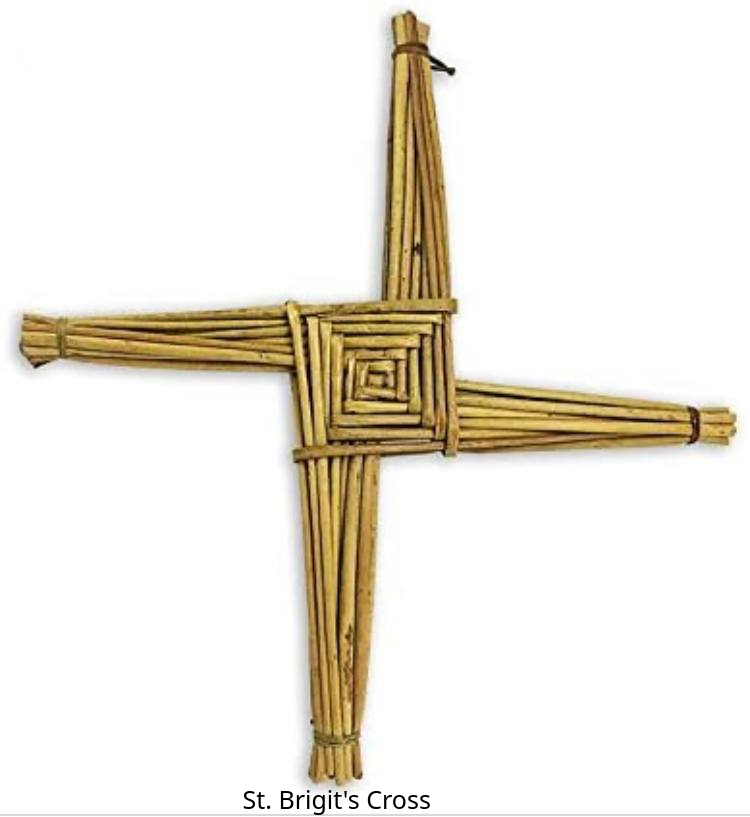
St Brigit's Cross - With It's Own Meanings and Symbolic Representation of the Cross of Jesus, Stands as Another Example of Artistic Interpretation of the Cross.
In Roman times, the tau crucifixion (a T-shaped cross) was primarily referred to as the crux commissa. It was one of the common forms of execution during that period, often associated with the Greek letter tau and the shape of the letter 'T'.
Key Nomenclature and Terms:
- Crux Commissa: The Latin term for a T-shaped cross, used to distinguish it from the Latin cross (†) or diagonal cross (saltire). It was formed by a horizontal beam (patibulum) attached to the top of the vertical stake (stipes).
- Tau Cross: Known as the "tau" cross because it resembles the uppercase Greek letter tau (Τ), which shares the same form as the Latin "T".
- Stauros (σταυρός): The Greek term for a stake or pole, which, when used in the context of Roman crucifixions, often referred to a cross-shaped device, including the tau shape. Lucian of Samosata (2nd century AD) noted that the letter Tau (Τ) provided the model for the wooden instrument used for crucifixion.
- Saint Anthony's Cross: An alternative name often associated with this shape.
Usage in Antiquity:
- Seneca the Younger (c. 4 BC – AD 65): Described various types of crosses used, indicating that the tau shape was one of several methods used for torment.
- Lucian and Artemidorus (2nd century AD): Described the cross in terms of its T-shape, with arms outstretched, directly referencing the letter tau.
- Archaeological Evidence: The Puteoli graffito (late 1st/early 2nd century AD) depicts an individual on a T-shaped cross. This second-century graffito of a Roman crucifixion from Puteoli, Italy, is one of a few ancient crucifixion images that offer a first-hand glimpse of Roman crucifixion methods and what Jesus’ crucifixion may have looked like to a bystander.
- The 2nd-century Alexamenos graffito,the earliest surviving depiction of a Roman crucifixion, shows a T-shaped cross. Discovered on Rome's Palatine Hill, this satirical piece of graffiti is considered the oldest known pictorial representation of Jesus on a cross. It mocks a Christian named Alexamenos by depicting a donkey-headed figure on a T-shaped cross.
- Early Christian writers like Tertullian and the author of the Epistle of Barnabas equated the Greek letter (tau) and the Latin T with the cross of Jesus, highlighting its "shape of the cross" (species crucis).
Ultimately the use of the Tau cross or the Latin cross matters little in terms of the event and the death and resurrection of Jesus. Time and fanciful artwork has shaped the perspective of many (most) Christians who now firmly believe that the Latin cross they see in artwork was the cross used and the nail positions depicted there are also accurate.
For those of us who are extremely detail oriented and have a basic understanding of anatomy, possibly also of the human body's reactions under extreme pain, these artworks have never seemed valid or accurate.
For us, historical and anatomical accuracy are important and add credibility, understanding and a deeper empathy to the events and manner of the death of Jesus.
Thus I do not offer this information to fuel any disputes. Only to satisfy the detail oriented, fact driven and accuracy craving minds of those like minded individuals who, like me, sought a clearer understanding and more credible account of the method of execution which Jesus suffered yet, whom perhaps did not have access to the historical and anatomical information to clarify the methodology and depths of refined cruelty involved in the execution of the very Son of God, Jesus Christ.
Recent Articles


-
The Divine Office
Aug 07, 26 01:16 PM
 The Divine Office The Divine Office, also known as the Liturgy of the Hours or Opus Dei ("Work of God"), is the official, daily set of prayers of the Catholic Church
 -
A Simplified Breviary
Aug 07, 26 01:14 PM
 A Simplified Breviary or Missal of The Divine Office of St. Brigit's Community Catholic Church.
 -
The Ethiopian Bible
Jul 25, 26 09:07 AM
 The Ethiopian Bible, compared to the Roman Catholic and Protestant Bibles gives us a totally different view of early Christian teachings and practices,

Boat Harbour West, Newfoundland, Canada. Cell Number 709-276-0626
Join Us Also on Our St. Brigit's Community Catholic Church Prayer group on Facebook: https://www.facebook.com/groups/324523956473448